In the legal profession, precision is non-negotiable. Errors in contracts, briefs, or compliance documents can have serious consequences—ranging from financial losses and litigation risks to reputational damage. Traditional legal workflows, which rely heavily on manual drafting and review, are prone to human error. Even the most diligent lawyers can overlook inconsistencies, mis-citations, or ambiguous clauses under time pressure.
This is where AI Legal tools are transforming the landscape. By combining natural language processing (NLP), predictive analytics, and smart document automation, AI platforms are significantly reducing errors, ensuring compliance, and improving efficiency in legal document management.
This article explores the ways AI Legal tools are reducing errors, the technologies behind them, and why law firms are increasingly integrating AI into their workflows.
The Problem of Errors in Legal Documents
Legal documents are complex, detailed, and often lengthy. Errors can occur in multiple forms:
- Typographical and Formatting Errors
Inconsistencies in numbering, clause formatting, or dates can create confusion or even invalidate sections of a contract. - Incorrect Citations and References
Misquoting case law, statutes, or regulations can weaken legal arguments or lead to non-compliance. - Ambiguous or Conflicting Clauses
Poorly drafted language can result in disputes or litigation, as parties may interpret terms differently. - Oversights in Compliance Requirements
Failing to adhere to jurisdiction-specific regulations or corporate policies can have legal and financial consequences.
Traditional manual review is insufficient to eliminate these errors entirely, particularly under tight deadlines or high document volume.
AI Legal Tools: How They Reduce Errors
Modern AI Legal tools address these challenges through automation, verification, and predictive analytics.
1. Automated Drafting and Standardization
AI can generate draft contracts, agreements, and briefs using pre-approved templates or learned firm standards. Automated drafting ensures:
- Consistent formatting across all documents.
- Standardized terminology and clause structure.
- Elimination of repetitive human errors such as missed references or inconsistent numbering.
Benefit: Lawyers spend less time correcting minor mistakes and more time on substantive legal work.
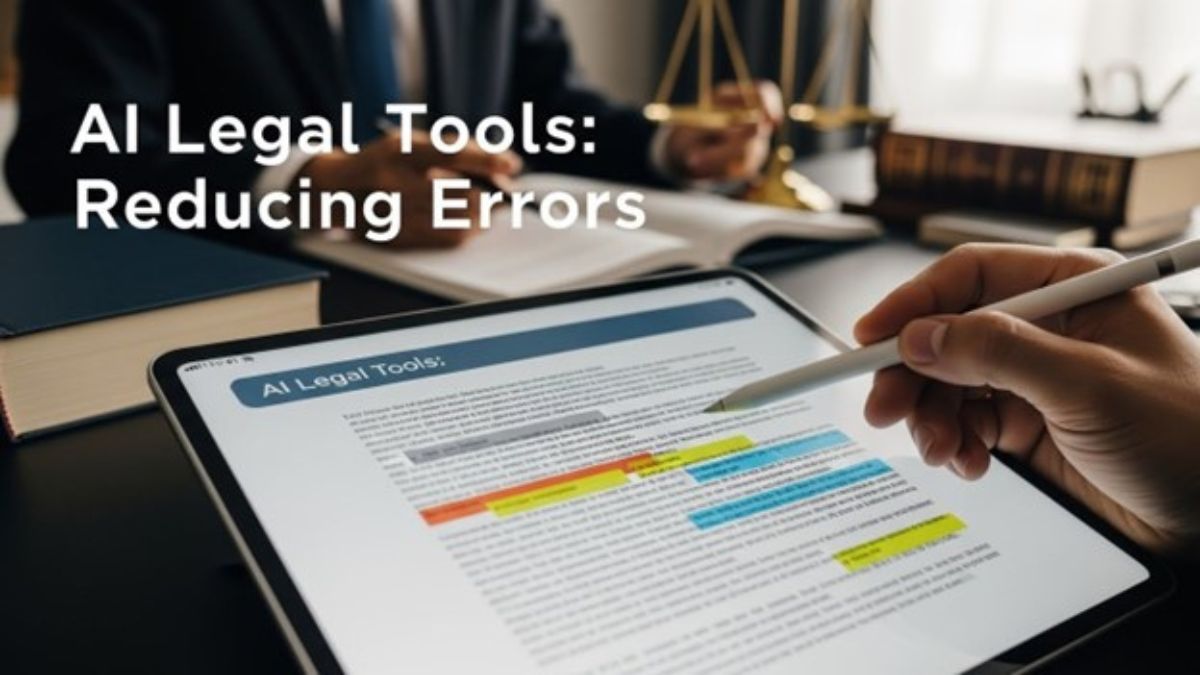
2. Real-Time Error Detection
AI Legal platforms continuously scan documents for errors as they are created:
- Detecting inconsistent definitions or conflicting clauses.
- Highlighting missing or incomplete information.
- Alerting lawyers to ambiguous language or potential legal risks.
3. Citation and Reference Verification
AI tools integrate with legal databases to verify case law, statutes, and regulations:
- Automatically checks citations for accuracy and currency.
- Flags outdated precedents or superseded laws.
- Suggests correct references based on jurisdiction or legal context.
4. Clause Analysis and Risk Identification
Advanced AI can analyze individual clauses for potential risk:
- Identifying unusual or high-risk clauses such as indemnity, arbitration, or liability terms.
- Comparing clauses against industry benchmarks or past firm documents.
- Recommending safer alternatives or highlighting negotiation points
5. Predictive Analytics and Historical Insights
AI learns from historical documents to predict potential errors:
- Recognizes patterns associated with past mistakes.
- Suggests clause modifications based on prior successful outcomes.
- Highlights sections that frequently require manual edits.
6. Workflow Integration and Collaboration
AI Legal tools often integrate with existing document management systems:
- Tracks edits, maintains version control, and flags discrepancies between revisions.
- Facilitates collaboration across legal teams while ensuring consistent standards.
- Provides audit trails for accountability and compliance purposes.
Case Example: AI Reducing Errors in Contract Drafting
A mid-sized corporate law firm handles dozens of NDAs, vendor agreements, and employment contracts daily. Traditionally, junior associates drafted contracts manually, followed by multiple rounds of partner review. Errors such as inconsistent definitions, missing clauses, and outdated references were common.
By implementing an AI Legal drafting and review platform:
- Initial drafts were generated automatically using firm-approved templates.
- Real-time verification flagged errors and inconsistencies immediately.
- Citation checks ensured all statutes and case law references were accurate.
Result: Drafting time decreased by 60%, and errors identified in partner review dropped by over 80%. Lawyers could focus on negotiation strategy and risk management rather than manual error correction.
Benefits of Error Reduction Through AI Legal Tools
- Increased Accuracy
AI minimizes human mistakes, ensuring documents are precise, consistent, and legally compliant. - Time Savings
Fewer manual corrections reduce drafting and review cycles. - Enhanced Risk Management
Predictive analytics and clause checks help mitigate potential disputes or compliance violations. - Improved Client Confidence
High-quality, error-free documents build trust with clients and stakeholders. - Scalable Workflows
Firms can handle larger volumes of documents without increasing error rates.
Best Practices for Leveraging AI to Reduce Errors
1. Combine AI With Human Oversight
AI is a powerful assistant, but lawyers must validate outputs:
- Review AI-generated drafts for legal nuances and client-specific requirements.
- Confirm that risk alerts and recommendations align with firm policies.
Tip: Adopt a human-in-the-loop approach to ensure accountability and accuracy.
2. Customize AI Tools to Firm Standards
- Integrate firm-approved clauses and language.
- Tailor templates to jurisdiction-specific requirements.
- Update AI with lessons learned from past errors to continuously improve performance.
Benefit: Reduces manual corrections and ensures AI outputs meet internal quality benchmarks.
3. Implement Version Control and Collaboration Protocols
- Track document revisions to prevent inconsistencies.
- Use AI to flag discrepancies between multiple reviewers.
- Maintain an audit trail for regulatory compliance and internal accountability.
4. Provide Training for Legal Teams
- Train staff on how to input parameters accurately.
- Teach lawyers to interpret AI suggestions and alerts effectively.
- Encourage feedback loops to improve AI performance over time.
5. Monitor Performance Metrics
- Track reductions in errors, review time, and revisions.
- Measure adoption rates among lawyers.
- Continuously refine AI models and templates based on usage data.
Future Trends in AI Legal Error Reduction
- Real-Time Contract Negotiation Support
AI will suggest clause changes and risk mitigations during negotiations, preventing errors before execution. - Cross-Jurisdictional Compliance Checks
AI will automatically adapt drafts to different regulatory environments, reducing compliance errors in global transactions. - Predictive Litigation Insights
AI may forecast potential disputes based on clause language, helping lawyers proactively mitigate errors. - Continuous Learning and Knowledge Integration
AI will evolve by learning from firm-specific documents, historical errors, and legal outcomes to prevent mistakes before they occur.
Conclusion
Errors in legal documents are costly, time-consuming, and potentially damaging. AI Legal tools are transforming the way law firms approach drafting, review, and compliance by automating repetitive tasks, verifying citations, analyzing clauses, and providing predictive insights. By reducing errors, AI enhances efficiency, minimizes risk, and improves client confidence.
Successful integration of AI requires a hybrid approach: leveraging AI for drafting and verification while maintaining human oversight for strategic judgment. Platforms like StrongSuit exemplify how AI Legal tools can turn hours of error-prone work into minutes of accurate, reliable output.
As AI continues to evolve, law firms that adopt these tools thoughtfully will gain a significant competitive advantage—producing high-quality legal documents with speed, precision, and consistency.